A part to play.
Something you can do that makes a difference—and a way to know your contribution matters.
Forthcoming · Nonfiction
A Study of Belonging
in a Changing World
The world can move on
without you leaving.
A historical and cultural inquiry into what happens when the places, roles and relationships that give life its shape begin to change.
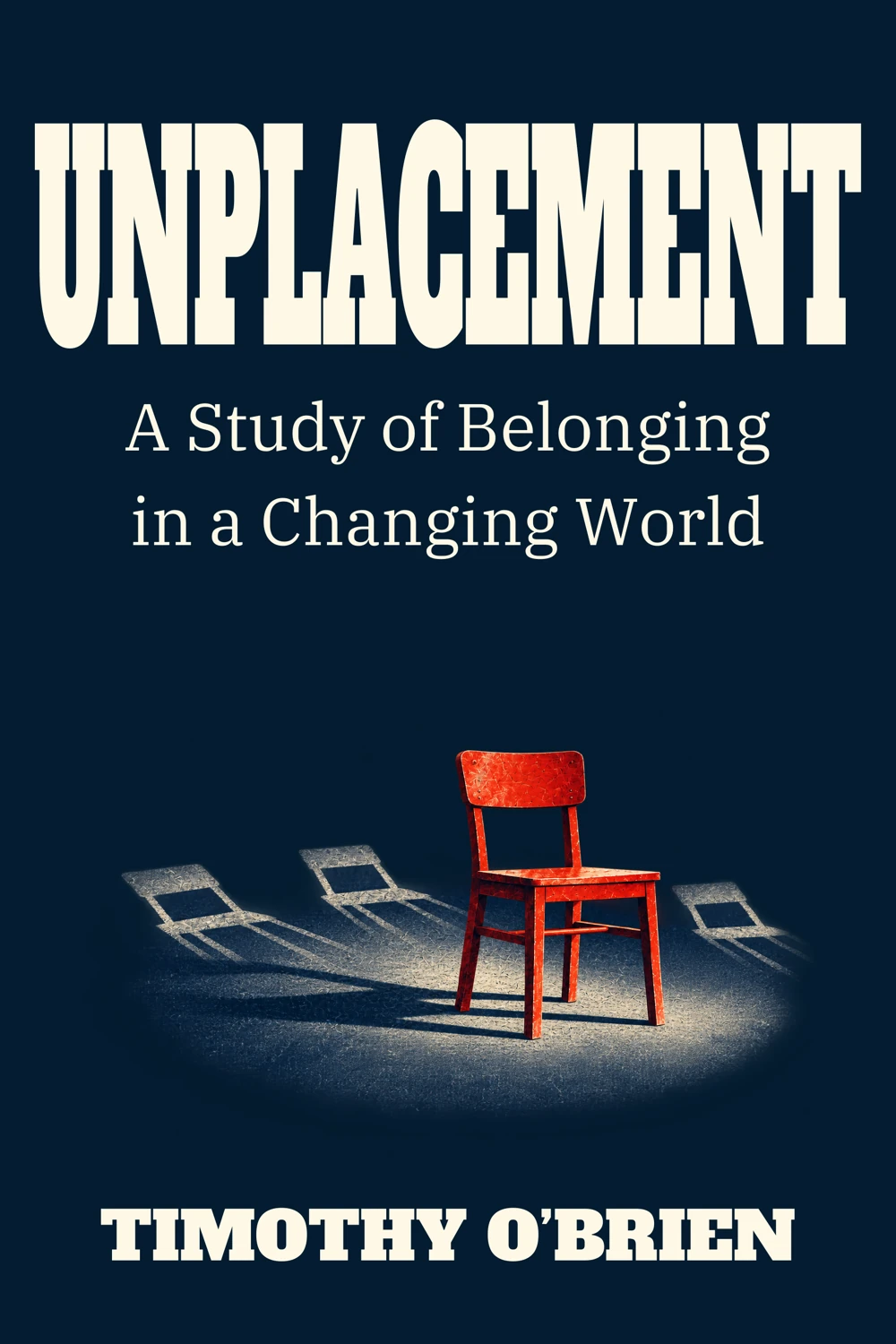 A place in a world that moves on.
The question at the heart of the book
A place is more than somewhere to live. It is a part to play, people who recognize you, and some influence over what happens next.
What happens when those connections loosen—even while life becomes more efficient, more comfortable, or more connected?
Unplacement follows that question across ancient citizenship, Irish place names, bicycles, recorded music and the unfolding transformation of AI. It examines both the possibilities change opens and the places it can take away.
Start with “Everything Works”More than a question of work
Something you can do that makes a difference—and a way to know your contribution matters.
Language, music, habits and relationships that make a place recognizable as yours.
The ability to take part in decisions, beyond being asked to approve what has already been arranged.
Inside the book
The shape of the inquiry
Ten chapters, an introduction and a conclusion. Historical lives meet contemporary evidence, with source notes throughout.
Read selected passages ↗Introduction
Belonging, usefulness and a consequential part in the world.
Bicycles, freedom, exclusion and the terms of participation.
Athens and Rome: when the office outlasts the authority.
Weather, markets and political choices in revolutionary France.
Language, land and the changing terms of Irish life.
Music, community, recording and who gets to make a living.
What the evidence about AI can—and cannot—tell us.
Provision, belonging and a say in collective decisions.
Four possible paths through a changing world.
Anticipation, unequal choices and the limits of hindsight.
Conclusion
From the blog
An introduction to Unplacement, and why belonging involves more than having a job or an address.
Read the essay 3 minute read