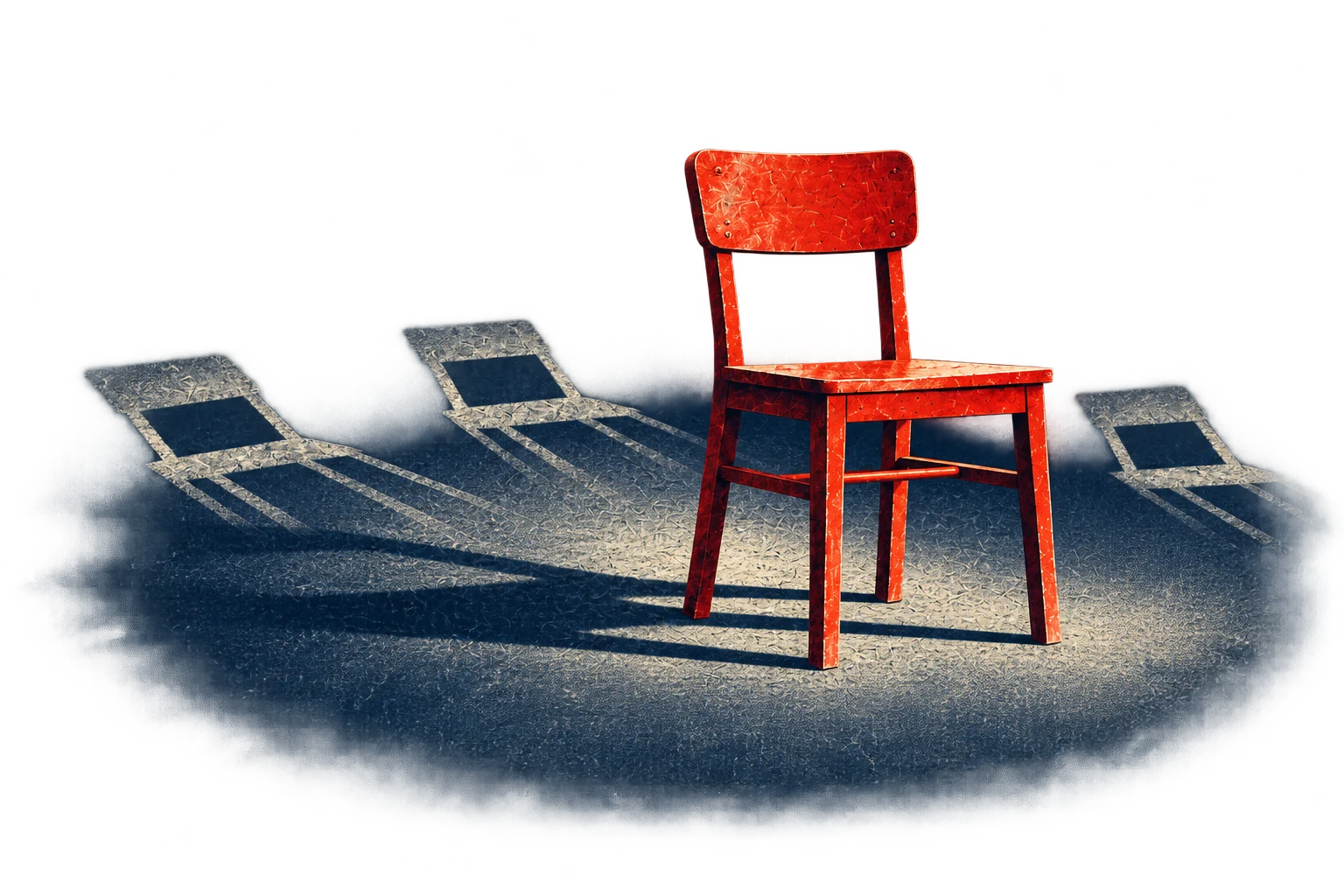
An address can stay the same while the life around it becomes difficult to recognize. The familiar buildings are still there. So are many of the people. But the language of an institution changes, a gathering stops happening, or a decision that once required your judgment arrives already made.
You have not necessarily moved. Your place in things has changed.
That is the question behind Unplacement: A Study of Belonging in a Changing World. What gives someone a place, and what happens when the terms of belonging begin to shift?
More than a question of work
An occupation can give a person income, relationships, recognition and a reason to be somewhere. Losing it can disturb all four. But a job is only one way to have a part in the world.
People also belong through a language, a musical tradition, a neighbourhood, a family or an association that depends on them. They may have a say in a public decision, or know how to do something that other people need. These connections do not fit neatly into a count of who is employed.
A study of belonging has to make room for them.
What change opens—and what it closes
Useful technology belongs in this inquiry. Better tools can widen what a person is able to do. They can make participation possible where it was difficult or forbidden before. They can also change who gets heard, whose knowledge counts and who has a practical way to enter.
The book follows those questions through ancient citizenship, Irish language and land, bicycles, recorded music and contemporary AI. These are different histories, with different causes and consequences. Bringing them together creates opportunities to ask better questions about change; it does not make them instances of one inevitable story.
Nor is every lost position something that ought to be restored. The loss of an exclusive privilege and the loss of a way to participate call for different judgments. Belonging for some people has often depended on keeping others outside.
Somewhere to begin
Three questions run through the book. What can you do that makes a difference? Where are you recognized as someone who belongs? And how much say do you have in what happens next?
They do not produce a score or a diagnosis. They offer a way to examine a change that may look successful from one angle and leave something consequential missing from another.
This blog will make space for essays on those questions, historical encounters and updates as the book takes shape. The book is forthcoming. For now, the complete introduction, “Everything Works,” and three selected chapter passages are available in the reading room, with their source notes.
Read the introduction or browse the reading room. You can also join the Unplacement newsletter for new writing and book updates.